
Welcome to the OpenSea digest. Let’s look back through the biggest NFT and web3 news of the week.
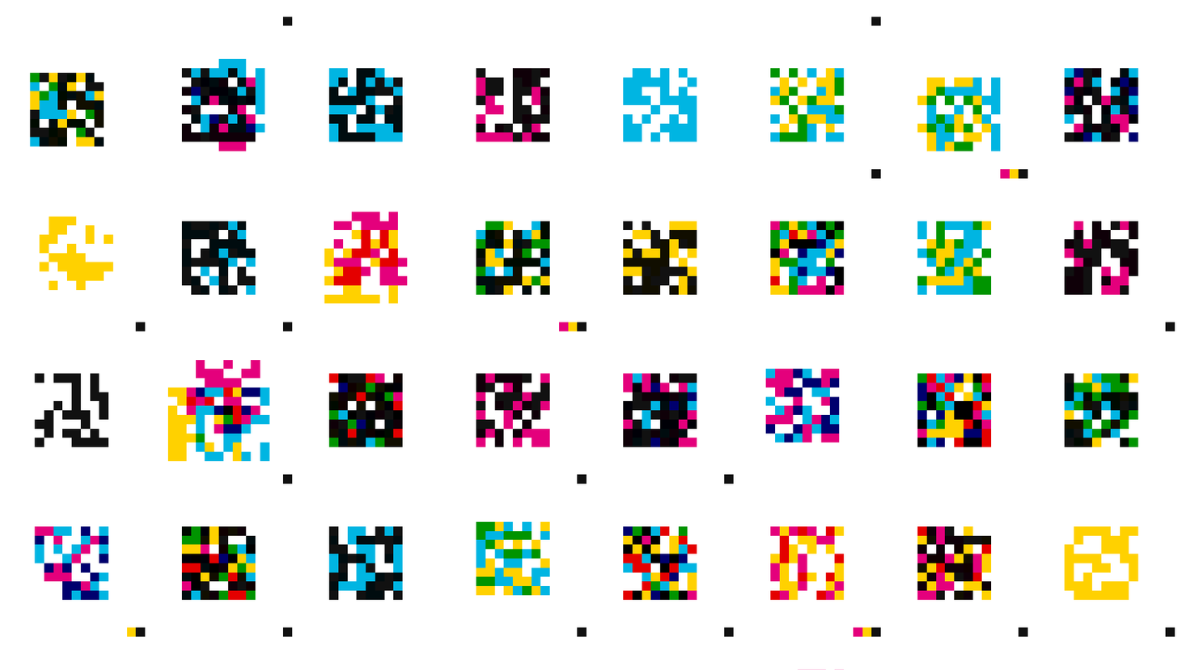
Lumen Prize recognizes digital artists exploring systems and structures
The Lumen Prize, a global award for artists working with technology, released its list of Systems and Structures Award finalists this week. The category honors art that shows people the hidden systems running through daily life, from digital networks to institutional rules.
Digital artist Jules and engineer Mungi made the list for the piece "Birds," alongside dozens of other finalists.
Among them was poet and AI artist Sasha Stiles for her work, “A LIVING POEM,” which was featured in the Museum of Modern Art.
View all the Lumen Prize finalists here.
Wyoming moves $FRNT to Chainlink
The Wyoming Stable Token Commission, the state group that runs the Frontier Stable Token ($FRNT), announced this week that it moved its cross-chain infrastructure from LayerZero to Chainlink, a company that builds cross-chain infrastructure for digital assets.
The cross-chain infrastructure is the technology responsible for letting a digital token move between different blockchain networks. The $FRNT token runs on eight different blockchain networks including Ethereum and Solana, according to the press release.
The release also included quotes from the Commission’s executive director Anthony Apollo. He said the Commission moved to Chainlink after a security review determined CCIP met its security and reliability requirements.
Chainlink co-founder Sergey Nazarov said the move shows why governments need dependable systems to handle digital assets at large scale.
X explores paying creators in stablecoins
The Elon Musk-owned social media platform X is reportedly talking with people about paying creators using stablecoins. That's according to a person familiar with the discussions who spoke with CoinDesk. Stablecoins are digital tokens designed to maintain a one-to-one peg with the U.S. dollar.
X’s stablecoin exploration comes as social media companies have already begun testing similar stablecoin payment tools for creators. Meta, the parent company of Facebook and Instagram, already pays some creators in $USDC via Solana and Polygon.
Meanwhile, Musk's rocket company SpaceX uses stablecoins to collect payments from international Starlink customers.
And given that X hired former Aave Chief Product Officer and Base design lead Benji Taylor back in March, his hire signals X's growing crypto ambitions. X has not confirmed the discussions.
Visa searches for new stablecoin partner
Payment giant Visa is searching for a new partner to help settle stablecoin transactions after Mastercard bought its former partner BVNK.
Visa had reportedly invested in BVNK in May 2025 and worked with the company starting in January 2026 to run stablecoin payments through Visa Direct, its payment network.
According to a request for proposal reviewed by CoinDesk and reported on Aug. 18, any new partner must be legally licensed to run cryptocurrency exchanges in the U.S., Canada, the U.K. and Singapore.
The partner also has to support Open USD, a new stablecoin with more than 140 participating businesses, including BlackRock, Coinbase and Google.
Visa already handles some stablecoin payments on its own Visa Stablecoin Platform, launched in July, as well as through Zero Hash, which as of Aug. 5 powers stablecoin capabilities within Visa Direct, a network that reportedly reaches 18 billion payment endpoints across 195 countries.
SEC proposes new rule to ease crypto token sales
The U.S. Securities and Exchange Commission proposed a new rule this week that would make it easier for crypto companies to sell digital tokens and raise money.
According to the press release, crypto entrepreneurs could raise up to $5 million in tokens over four years with fewer requirements, or up to $75 million a year if they agree to share financial statements and file regular reports with the agency.
SEC Chair Paul Atkins, appointed by President Donald Trump, said the plan would give crypto entrepreneurs a clear path to raise money under federal law.
The public will be able to weigh in on the plan for 60 days once the SEC publishes it in the Federal Register.
Disclaimer: This content is for informational purposes only and should not be construed as financial or trading advice. References to specific projects, products, services, or tokens do not constitute an endorsement, sponsorship, or recommendation by OpenSea. OpenSea does not guarantee the accuracy or completeness of the information presented, and readers should independently verify any claims made herein before acting on them. Readers are solely responsible for conducting their own due diligence before making any decisions.