What happens when a meme-fueled NFT project dives headfirst into one of the world’s most popular gaming platforms? For the team behind Sappy Seals, the move into Roblox was less of a pivot and more of a natural extension of their DNA. With backgrounds in competitive gaming and a deep love for internet culture, the team has quietly launched viral titles like Surf on a Seal and Sappy Coloring — earning millions of plays and a passionate new audience along the way.
We caught up with wab.eth and stormr.eth from the Sappy Seals team to talk about their stealth-first approach to game development, building for seal-lovers, and how they’re bridging communities across NFTs, Roblox, and beyond.

OpenSea: What inspired you to expand Sappy Seals into the gaming space, and why Roblox specifically?
Sappy Seals: Gaming has always been the lifeblood of our team. All of us grew up spending most of our spare time grinding every type of game no matter the genre. Many of our cofounders also have a competitive esports background and were big contributors to popular games. Our resident creative director / game designer / game dev / doctor / lawyer / teacher / plumber / astronaut, Diakou, is even a fighting game world champion.
I believe that gaming is crypto’s greatest use case, and it’s not even close — blockchains were made specifically to house virtual economies. The way it can align players, create an ecosystem that values their team, and allow for open source modding out of the box. These are the main issues the gaming industry has been facing for years; (a) players feeling grifted by companies that take more than they give and (b) losing access to games and associated identities/inventories as seen in the recent SKG movement.
We chose to expand into Roblox because it’s the closest thing we have to a true “metaverse”. It’s what the younger generations (Gen Alpha & lower end Zoomers) experienced as their version of ‘gaming’. The one thing that’s particularly interesting about Roblox is that it has its own distribution engine that basically pushes games that are fun for users and keeps them coming back. Our team’s strongest suit is game design and creating novel systems/mechanics, which means it’s quite easy for us to be pushed to the 400M+ users that Roblox has with minimal effort.

OpenSea: Surf on a Seal and Sappy Coloring seem to have emerged naturally, without a big debut. Was the decision to stealth launch them part of a larger philosophy around brand-building?
Sappy Seals: Building in stealth is the ultimate test to validate what we truly believe in. We want to build organically through gameplay and experiences before letting the community amplify. Build trust and grow the pie from the bottom up. We’re targeting early traction and strong signals that are denoised from typical CT chatter and bag bias with this.
OpenSea: You mentioned this effort is part of a broader strategy for the 'seal fandom' and sealtwt. How did you first discover or tap into that seal-loving internet community?
Sappy Seals: There’s a huge audience on sealtwt and sealtok that has extremely deep lore and is home to thousands of incredible artists and memers; a lot of giga autists essentially. That’s the exact demographic that the Sappy community is, so there’s a huge theoretical overlap there that I think is perfect.
What’s particularly interesting is that sealtwt and sealtok feels extremely underserved, there’s not many games or experiences curated specifically for them, and that’s absolutely a gap that we can fill. When they do get their hands on something they go absolutely crazy with it, which explains some of our virality when it comes to the Roblox games we’ve been making.
I actually discovered them from posting a video of a cute seal, which ended up getting thousands of likes/retweets out of nowhere. I’ve been following the community ever since and slowly have become more understanding of how deep it runs.
People who like seals are just built different (and seals are becoming a competitor in popularity with cats & dogs on social media, especially with gen alpha/zoomers).

OpenSea: How do you define success for Sappy Seals across platforms — NFTs, games, culture — and how do they all connect?
Sappy Seals: Truth be told, my only personal success metric is the amount of hearts & minds we capture. We should be touching people’s souls with the stories we write and the experiences we develop, and if that isn’t the case we go back to the drawing board. I don’t care if a given initiative is net zero profit-wise if it creates memories and impacts the recipient personally. Goodwill doesn’t have a price.
That being said, we obviously have our own internal success metrics when it comes to growth, revenue, overall DAUs/MAUs and we are developing our own hub that will house any and all traffic we have regardless of the medium directly towards it (TBA).
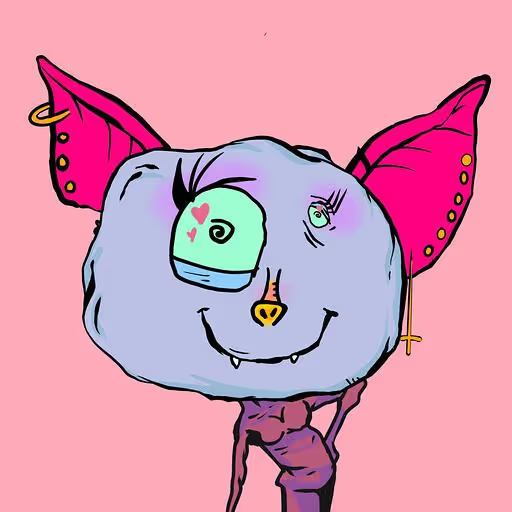
The way we connect it all is just through the proliferation of this face. The more people that trust and love this face [the sappy face], the greater the network effect will cascade. The greater the network effect, the more users we can directly tap into.
OpenSea: Surf on a Seal has become a top 20 game in Roblox’s “obby” category with 2M monthly users. What elements do you think contributed most to that traction?
Sappy Seals: At the end of the day it comes down to two things (a) creating an extremely fun game that provides a new experience that you can’t get elsewhere and (b) utilising IP and humour to make the experience memorable and easily shareable.
We also included some subtle references and homages to inside jokes within the sealtwt/tok community which created some very viral traction on social media. Marketing isn’t just paying people to post about your game, it’s innately providing reasons that make them want to go out of their way to post.
OpenSea: The game design feels playful — randomly generated themed courses, fish boosts, trait unlocks, etc. What were some core principles when designing the gameplay loop?
Sappy Seals: Primarily it was how we could take the “obby” archetype of game obby is short for obstacle course] and spin it on its head. There’s plenty of time trial games, but our principle was to give it that arcade-like mario kart feel (who doesn’t enjoy grabbing a power up and zooming past your opponents?)
We also wanted to create that feeling of “just one more race” so at the end of every race there’s always a reward and an incentive to try again and go for the top spot. It’s part of what keeps people hooked; a great arcade-style loop paired with a reason to keep going.

OpenSea: Sappy Coloring is a different pace — chill, musical, and creative. What was the design thinking behind launching such a distinct experience?
Sappy Seals: We noticed a trend of chilled out experiences on Roblox that were less fast paced and more for children or people that just wanted to relax.
It was just a fun concept that made use of our existing assets. Over the years we’ve accumulated hundreds if not thousands of high quality sketches and artworks that never saw the light of day, and plenty of similar sketches from the community, so it makes sense to put them to use. It only took stormr a couple of days to develop this with the help of nesha.
OpenSea: You've said you spent $0 on marketing — what were the most surprising or effective organic growth moments across TikTok, YouTube, and beyond?
Sappy Seals: We spun up fresh accounts for surf on a seal and funnily enough the most viral content with around a million views were just posts of us having fun doing stupid things like stacking hundreds of 3D seals up and letting them fall.
The biggest growth was achieved by leveraging the Roblox algorithm; it serves games to players based on a variety of metrics like D1 and D7 retention and average session length. By creating a solid core loop, we were able to hit the >90th percentiles on the core metrics, pushing our game to over 20 million weekly impressions. Pair this with memetic thumbnails, we were able to convert a large percent of these impressions to visits, and recurring users.

OpenSea: There’s now a wave of kids, VTubers, and content creators organically posting about the games. How do you support or interact with that creator ecosystem?
Sappy Seals: The main way is actually just interacting with them by commenting or saying something funny (this sounds like the bare minimum but it’s surprising that barely any developers do this at all).
We also post videos asking for ideas, map concepts, or new features we could add and reply to most of the responses (some videos have hundreds of suggestions). We gift them in-game rewards if their ideas make it into the game, and now we’re even looking at gifting Robux for their contributions that make it into the game.
OpenSea: What has surprised you most about Roblox as a platform for onboarding and community-building?
Sappy Seals: It’s its own social network. You have announcement channels and update pages baked natively into the platform that let you communicate to all of your subscribers directly.

OpenSea: Is there any intentional overlap between the Roblox player base and your NFT community, or are you treating them as separate worlds for now?
Sappy Seals: Right now I think they are separate audiences but there are plenty of seal NFT holders that do play surf on a seal for fun in their spare time. The Roblox community has been practically begging us to create a Discord but we’re still deciding on how to funnel them correctly without having a culture clash with our primarily crypto audience for now.
It’s a tough balance because a lot of these players really despise crypto/NFTs and there’s also generally a pretty wide age gap between the demographics so it has to be handled with care and gently. Step 1 is convincing these audiences that we aren’t the bad guy, which is in progress.
OpenSea: What does the roadmap look like for your Roblox games? Any upcoming features, new experiences, or collaborative drops you’re excited about?
Sappy Seals: Our Roblox team is currently just 2 people (stormr + 1 dev) but juiced up by leveraging AI to develop quickly.
Right now we’re just trialing out different concepts and ideas to get a better gauge of the Roblox algorithm and understanding what games are the most monetisable to justify a much greater investment into that ecosystem. You can expect us to keep shipping updates to existing titles.
We are seriously considering launching “lite” version of the other games we are developing in-house, namely Omnia & Project Fury, to create huge audiences/fandoms that can then be funneled towards the actual titles that will have much more substance and long term value for the consumer to experience.