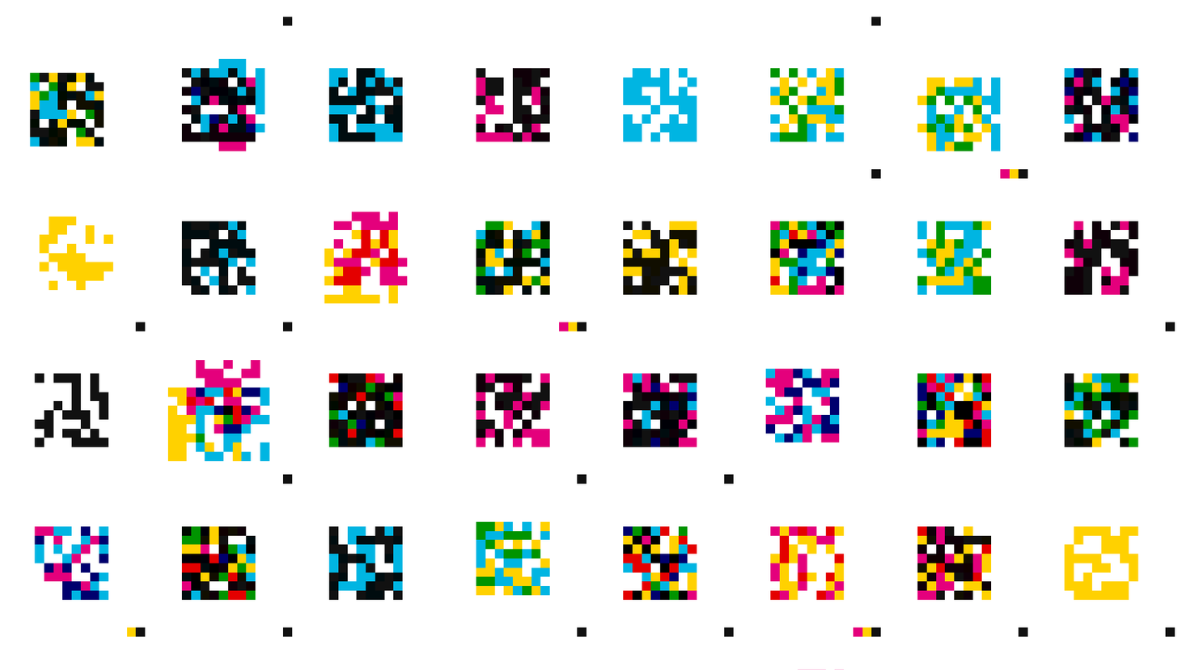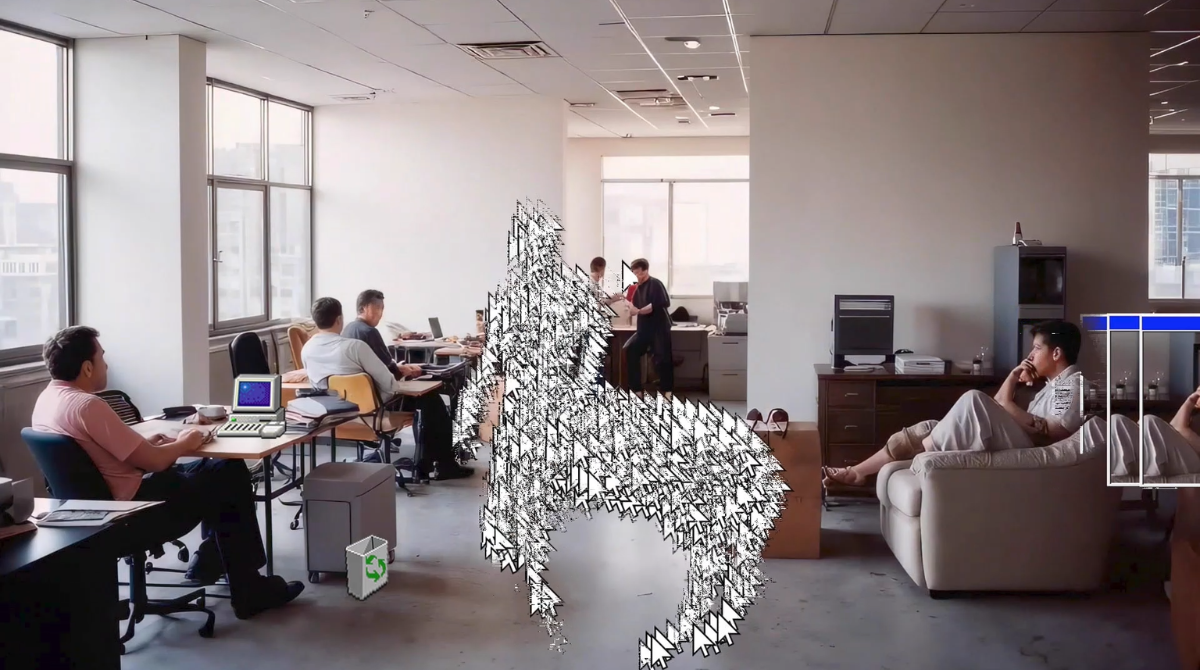
mendezmendez has been making digital collage since 2009, spending the first year and a half creating purely for himself before the work found its audience. Building on years of prior experimentation with vector illustration, digital painting, and other techniques, he discovered in digital collage something that none of those other mediums offered: an improvisational freedom that let random elements collide into unexpected meaning. Influenced by the surrealism of Magritte, the mathematical precision of Escher, and the pioneering digital collage work of Eduardo Recife, he developed a practice rooted in curiosity and a willingness to pull from anywhere, public domain paintings, Hubble telescope imagery, vintage biology illustrations, AI-generated figures, and his own sketches. His latest drop, ENTROPY, a body of work composed of three interconnected series (Combustion, Corruption, and Diffusion), is available to mint July 30 using OpenSea.
In early 2024, a 28-day creative challenge broke him out of a creative block and transformed his entire approach. What began as a short sprint became a permanent daily practice, and in the two and a half years since, he has produced over 840 works. That relentless output has sharpened a signature style, spawned multiple series, and opened doors he hadn't anticipated. We sat down with mendezmendez to talk about the discipline behind the daily work, his medium-agnostic approach to source material, and where he sees digital collage heading next.
OpenSea: You've been making digital collage since 2009, that's well over a decade of self-teaching. What did those early years look like, and how did you know you were onto something worth sticking with?
mendezmendez: Prior to the start of my digital collage practice in 2009, I was already making digital art and design for five years or so. During those first years, I experimented with vector illustration, mixing pencil drawings with digital painting, 3D, compositing, and other techniques. So when I began experimenting with digital collage, the foundational skills needed to create the work were there. It became obvious to me that this would become my preferred medium because from the very first piece I created, I fell in love with the improvisational nature of the collage process. Being able to throw seemingly random elements onto a canvas, play with their arrangement, discover novel ways in which they could interact, and uncover new meaning through those relationships was incredibly inspiring. I was hooked. I spent about a year and a half creating collages just for myself, and surprisingly, those early works still hold up to this day.
OpenSea: The name "mendezmendez" is pretty distinctive. Where did it come from, and how do you think about the online persona you've built around it?
mendezmendez: I wish there was a more interesting story behind it, but the reality is that Mendez Mendez is simply my real last name. The repetition is just a coincidence since both my parents share the same surname. Honestly, there has never been some grand strategy behind building a brand or community. It has all happened naturally through simply showing up every day and remaining consistent with my work.
OpenSea: Your influences span centuries and styles, from Escher's geometry to Magritte's surrealism to Eduardo Recife's digital collage roots. How do those references actually show up in your process? Is it conscious, or more like something that sneaks into the work?
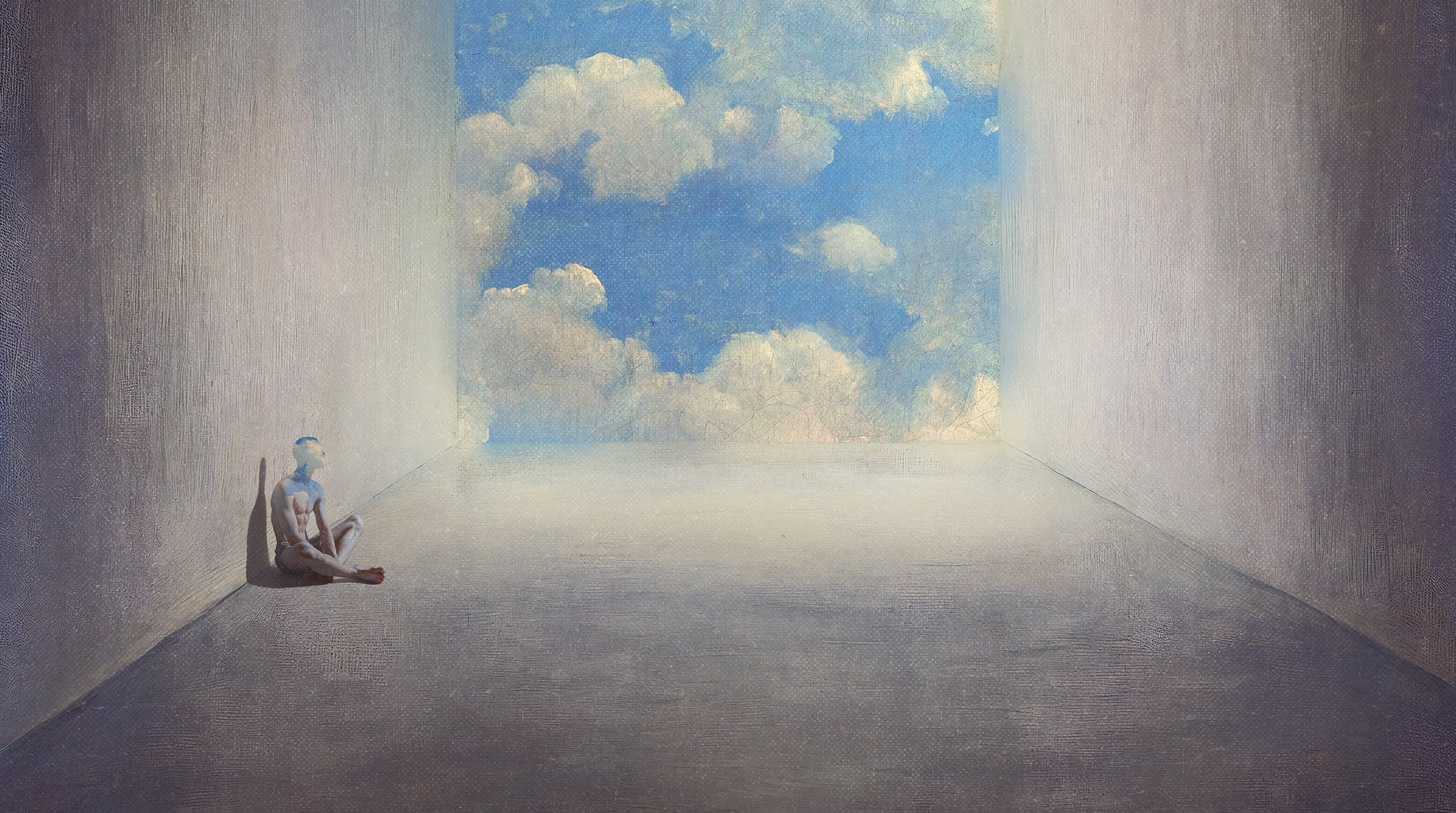
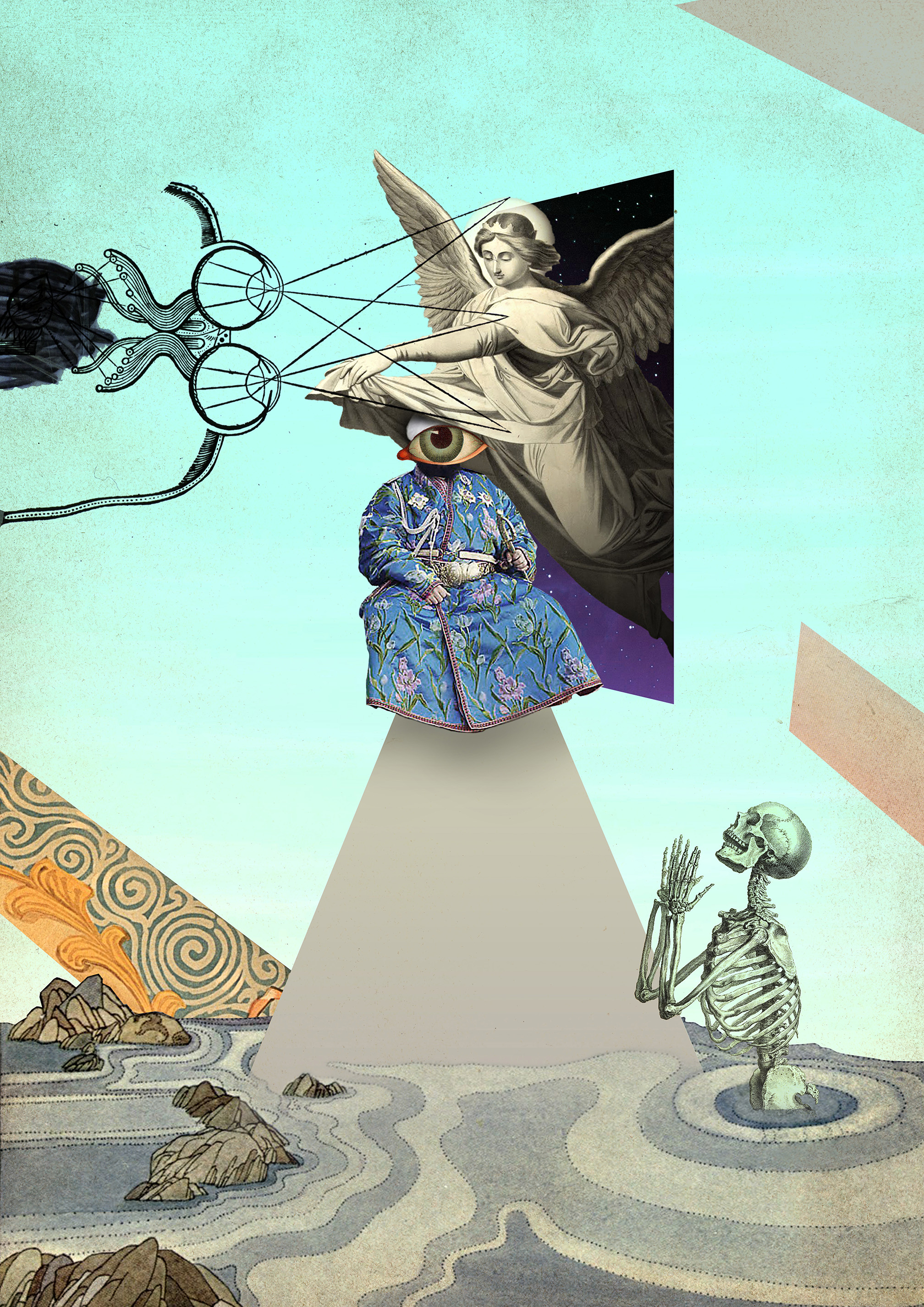
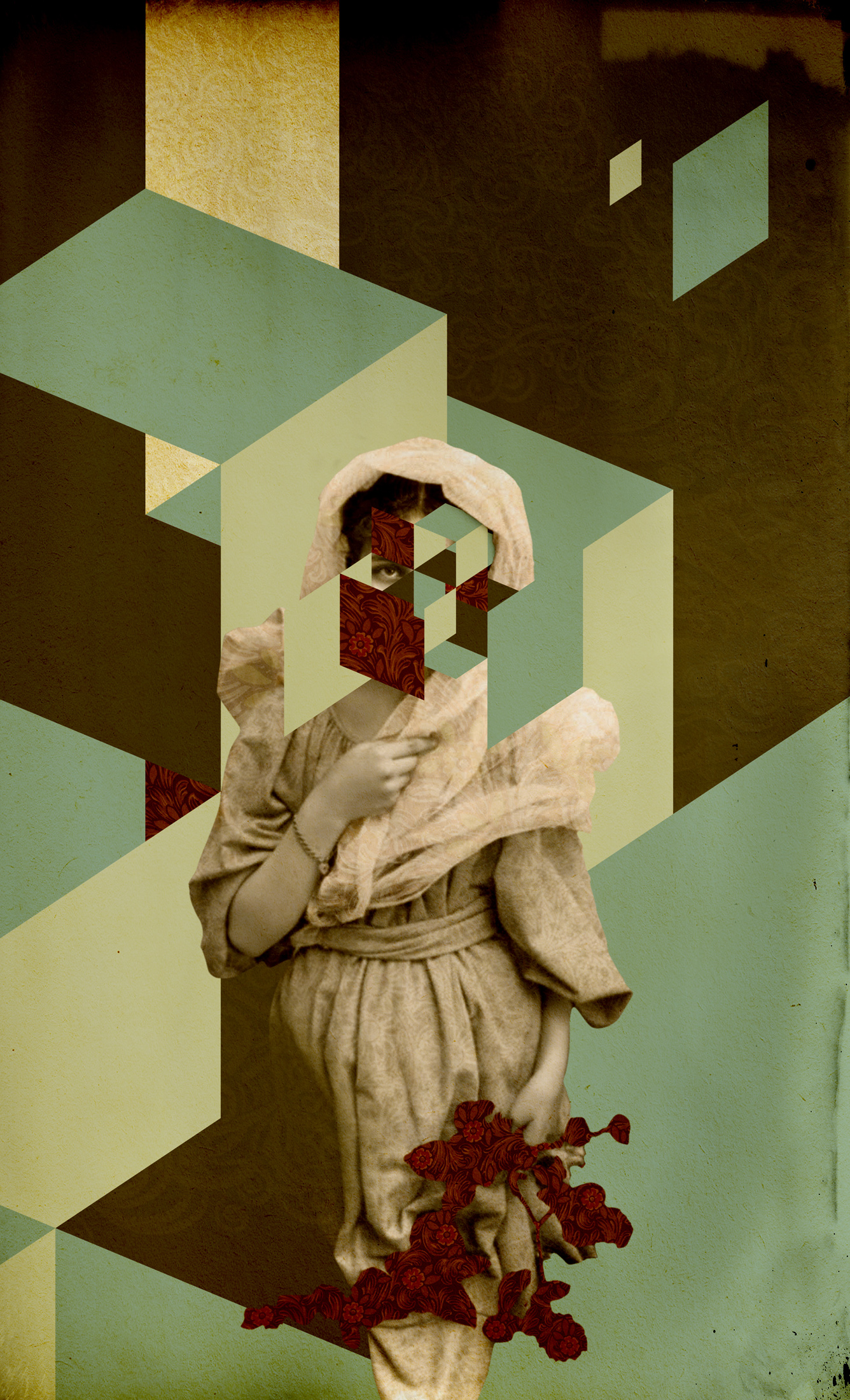
mendezmendez: After so many years and well over a thousand artworks created, these references still influence me, but mostly on a subconscious level. Eduardo Recife was my main stylistic reference when I first began. He is a master of the classic digital collage aesthetic. From Magritte, I have quite shamelessly appropriated the sky textured human form. He is my favorite surrealist because of his blend of minimalism and surrealism, executed with such clean and precise painting. Escher, on the other hand, was as much a mathematician and scientist as he was an artist. I have always been fascinated by the relationship between science and art, particularly through optical illusions, and in my opinion, M.C. Escher is one of the greatest examples of that intersection.
OpenSea: In early 2024, you made a pretty significant shift from perfectionism to a daily creation practice. What pushed you to make that change, and what did you have to let go of to get there?
mendezmendez: Originally, I set out to create a new piece every day for twenty eight days with a few friends as part of a creative challenge. I was experiencing a creative block at the time, so I figured a challenge like this would help pull me out of that funk. About two weeks into it, I experienced a complete paradigm shift in how I approached the creative process and in my assumptions about what was possible to create in a single session. Doors and opportunities began to open simply from sharing these daily works, and I saw that as proof of concept for what a daily practice could mean for my career. When the twenty eight day challenge ended, there was absolutely no doubt in my mind that I would continue creating daily works for as long as I am physically and mentally able.
To this day, I have created over 840 artworks in two and a half years. Through this process, I have developed a signature style, new techniques, multiple series, and major projects. A friend who has been observing my trajectory told me it feels like I have been speed running through my art career since beginning this daily practice. My only regret is not having started sooner.
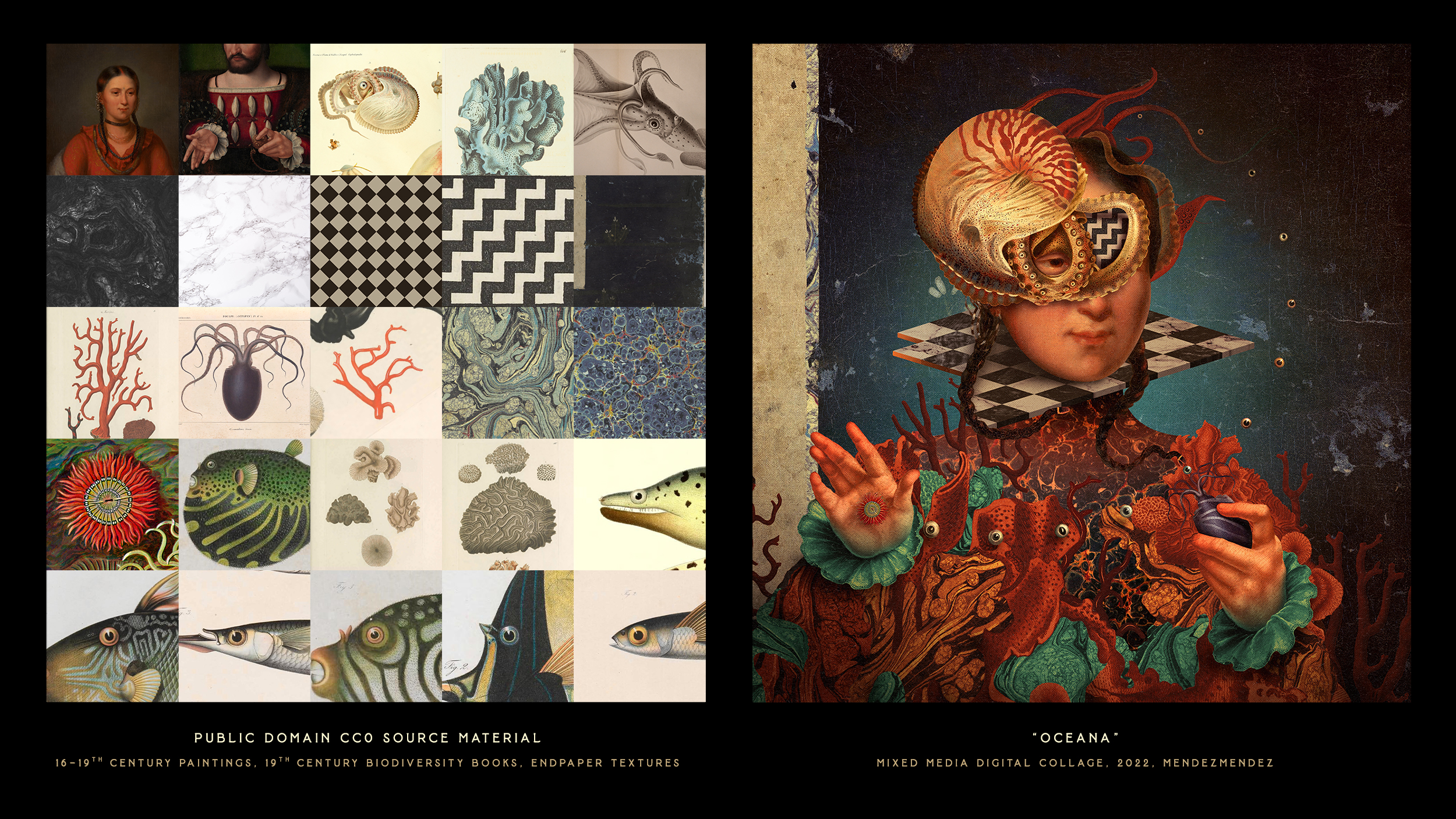
OpenSea: Your source material comes from a pretty wide net, including Public Domain paintings, photography, 3D renders, AI, and your own sketches. How do you decide what a piece needs? Is there a moment where you just know the right element when you see it?
mendezmendez: I am completely medium agnostic when it comes to source material. Certain elements are simply better when sourced from their original mediums. For example, if I want to displace a human form with ripple textures, I will specifically seek out water ripple photography. If I need flora or fauna, I often source those from vintage biology illustration books. Marbled paper textures always come from public domain sources.
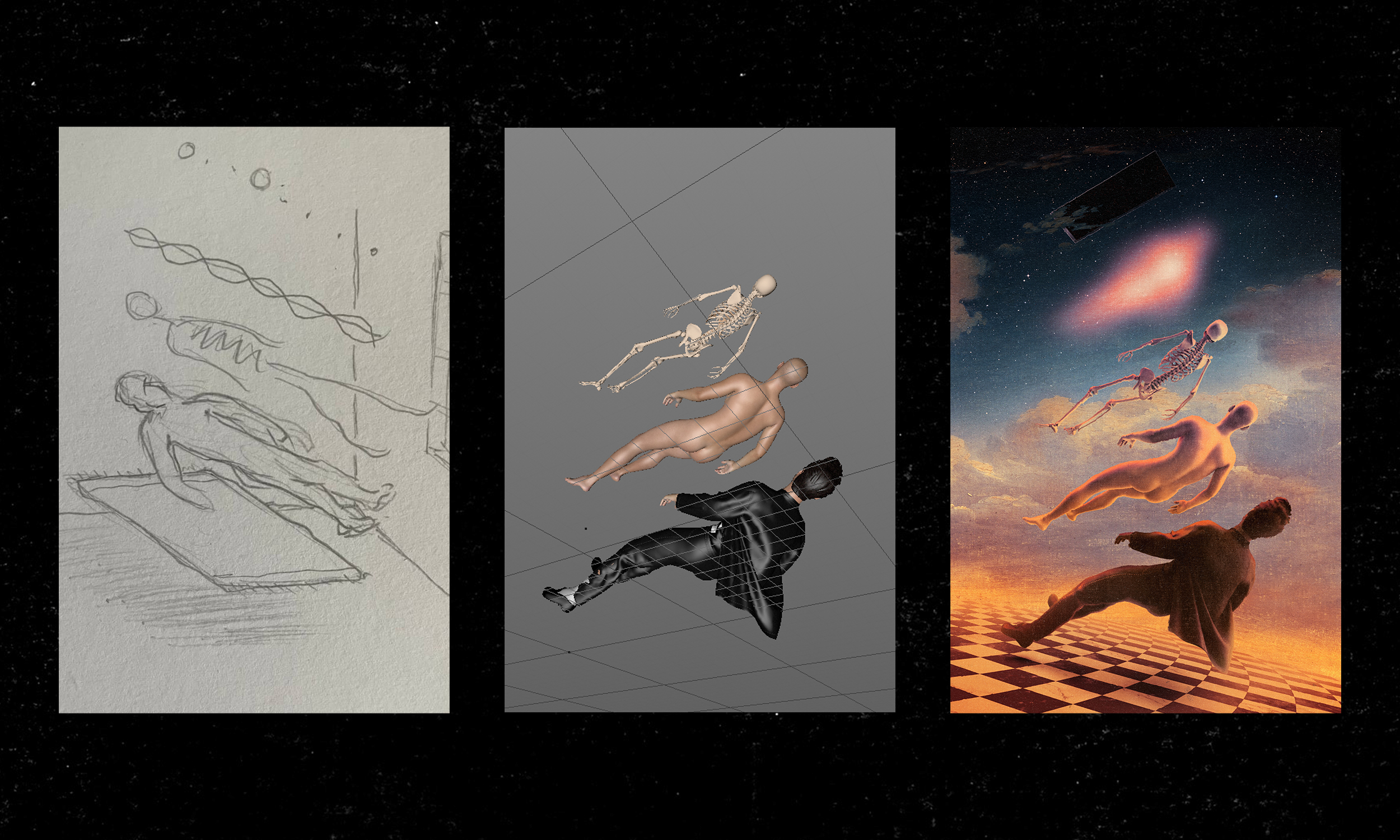
I use AI to generate human forms in very specific poses and angles. I prefer AI over 3D for this because of how quickly I can create a posed human form with an oil painting texture. With 3D, the process often feels too slow, rigid, and cold for my workflow. I am far too accustomed to the fast paced nature of digital collage to spend hours posing, texturing, and rendering a figure. My signature clouds come from an 1800s painting, while my stars are sourced from Hubble telescope imagery. At the end of the day, I will use anything and everything necessary to materialize an idea.
OpenSea: Surrealism has a long history, but digital collage as a medium is still relatively young. Where do you think the form is headed, and what do you feel you're contributing to it?
mendezmendez: The term "surrealism" gets used very loosely, especially in digital collage, but I think it is often misapplied to describe abstract collage compositions. True surrealism must maintain a foundation in realism, then disrupt that realism with something impossible.
For a while, I felt that much of the digital collage I was seeing online was beginning to look too similar. This was largely due to artists relying on the same limited pool of public domain source material available from museums and libraries. Once I began noticing this pattern, I felt compelled to expand my source material, which is what led me to incorporate 3D and AI into my practice.
I believe digital collage will continue evolving into a broader mixed digital media form, breaking free from the traditional retro and vintage aesthetic that has long defined public domain collage work. I would love to think that my own approach might inspire other collage artists to embrace AI simply as another source material within their workflow, because it offers artists the opportunity to develop a far more unique visual language that helps them stand apart stylistically.
OpenSea: Consistency is something you talk about openly, showing up every day and trusting the process even when a piece doesn't land. Has that discipline changed the way you relate to your own work, or how you measure what a "successful" piece even is?
mendezmendez: You would think that after more than 840 artworks, I would have a stronger grasp on what makes a piece successful, but honestly, I don’t. The cliché that "art is subjective" is very real, and that reality only becomes more apparent at scale. Every single day I share a new piece, I genuinely have no idea how people will respond to it. Whenever a piece unexpectedly resonates and reaches hundreds of thousands of people, it always comes as a surprise.
I use that uncertainty as motivation to stay focused on what personally interests me. I have always made art for myself first. Whether others connect with it or not is ultimately outside of my control.
So yes, this discipline has absolutely changed my perspective. It has reinforced the importance of focusing on creating what I find meaningful, because I cannot control audience preferences. Even if I could predict what others wanted, I would never compromise my integrity as an artist simply to cater to external expectations.
OpenSea: What's next for mendezmendez? Are there any new projects or upcoming releases you can share with us?
mendezmendez: The daily practice will continue indefinitely. It is the foundation of my creative process now and the core mechanism through which I develop new bodies of work. Beyond that, I am currently working on a continuation of my animated impressionist series, but with an entirely different approach in process from the first iteration. I am also deeply engaged in building my own software tools for experimental art series, as well as exploring autonomous art systems, plotter based works, and generative art. It’s an incredible time to be a digital artist!
Honestly, I am having a ridiculous amount of fun in the studio lately, and I am hopeful that all of this experimentation will lead to new series that are worthy of sharing with the world.
Disclaimer: This content is for informational purposes only and should not be construed as financial or trading advice. References to specific projects, products, services, or tokens do not constitute an endorsement, sponsorship, or recommendation by OpenSea. OpenSea does not guarantee the accuracy or completeness of the information presented, and readers should independently verify any claims made herein before acting on them. Readers are solely responsible for conducting their own due diligence before making any decisions.