Poet and transdisciplinary artist Ana María Caballero has spent her life exploring the space where language, memory, and technology meet. Her work grows from a long standing belief in the power of the written and spoken word and from an early dedication to poetry that has evolved into a practice collected by major museums and embraced across digital art communities. She approaches text as both a personal and communal exchange, exploring how meaning shifts over time and how audiences become active participants in shaping it.
In this conversation, Caballero reflects on the influences that guide her writing, the evolution of her digital and spoken word projects, and the possibilities unlocked by blockchain provenance. She shares how web3 has created new paths for literary connection, why she continues to experiment with collaborative forms of authorship, and what she hopes visitors will experience through her new activation, In Record Time, at Art Basel Miami.

OpenSea: How did you first come to poetry, and when did you realize it would become the foundation of your practice?
Ana María Caballero: I don’t think one chooses to become a poet. Poetry is a vocation, a calling. But I knew I was one when, at twelve, I had to bike to the drugstore to purchase new notebooks for school halfway through the year, having filled mine up with poems. In my twenties, I created a blog called The Drugstore Notebook, where I shared my writing and book thoughts in honor of the composition notebooks I so often had to purchase growing up.
OpenSea: Which writers or artists have shaped your thinking most, and in what ways do you feel their influence in the work you are making now?
Ana María Caballero: I’m heavily influenced by the works of poets such as T.S. Eliot, Louise Glück, Lucille Clifton and Sharon Olds — authors with unmistakable poetic voices. Believing that few elements are as intimate as the sound of our physical voices, my digital poems include a spoken-word component, combining poetic and physical voice to create deeply immersive experiences.
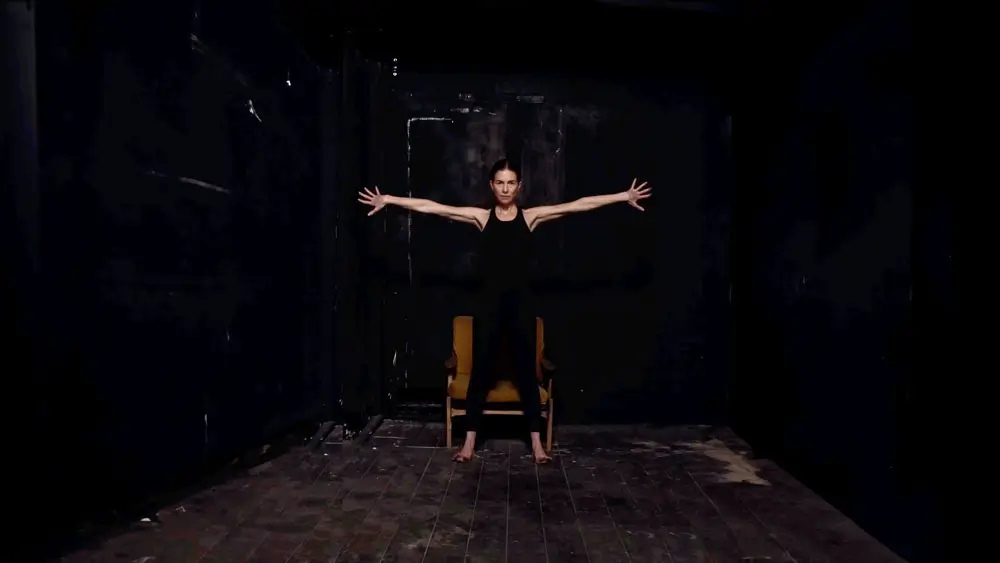
My spoken-word video poems fit within a long trajectory of text-based art, much of which, like my digital work, could be considered performative, as the use of language implies an active rather than passive exchange with the audience. From Ed Ruscha’s word paintings, to John Baldessari’s “Tips for Artists Who Want to Sell,” to Tracey Emin’s starkly straightforward neon signs, text in art overtly presents words as vessels of meaning. In doing so, such works touch upon the instability of language itself as a mechanism of storing and transmitting meaning. Words mean different things to each of us; meaning evolves over time.
It's precisely this vulnerability that draws me to language.
OpenSea: You have embraced blockchain as a medium for publishing and preserving poetic work. What does the technology allow you to do that traditional literary and art worlds do not?
Ana María Caballero: In web3, a new path that doesn’t rely solely on book sales is emerging, one in which writers can build a market for their works — yes, to generate the attention of publishers, but also to transact directly with their audience via blockchain provenance. This ownership economy represents a powerful evolution. I don’t know who’s acquired my books on Amazon, but I do know what wallet addresses own my digital verse. Such knowledge empowers writers and allows them to turn an audience into a community.
OpenSea: Your work is collected by major museums. How does it feel to see poetry held in these traditional spaces, and how does that experience compare to sharing your work in digital environments?
Ana María Caballero: It’s incredible to know that my work is in collections such as the Reina Sofía in Madrid, where Picasso’s Guernica lives. When an institution acquires a work, it affirms this work’s cultural and historic value by ensuring its preservation. Museum vaults lack space; museum staff lack time. Acquiring a work is a complex decision, involving many stakeholders.
Once works enter institutions, they’re also, of course, more likely to be exhibited by them, potentially amplifying an artist’s message exponentially. Placing works in museums can also prove transformative on a commercial level — collectors feel confident acquiring an artist with institutional placements because their work’s value will hold over time.
It’s a complete dream to see my work find its way into museums, but the process thrives elsewhere. Artworks don’t live and breathe in museum vaults; they do so in public.
I value the connections I’ve built online just as much as institutional acquisitions because an equally important narrative is being created — one of independent thought and community-driven signification. As an artist, I want to create, exhibit, perform within this dynamic environment.

OpenSea: You are represented by galleries as both a poet and a transdisciplinary artist. How have galleries helped shape or expand the way your work is encountered?
Ana María Caballero: Early on, I sought to connect with galleries active in the digital art ecosystem because I think that web3’s greatest weakness is its subservience to social media. I wanted my work to be experienced outside of the feed. Additionally, exhibiting screen-based work is its own art. If we don’t show our work in physical spaces, we’ll never learn how to do so in a way that elevates the work.
Meanwhile, the most enriching moments I’ve had have been spending time with people met online in events hinged around digital art. As artists, we can collaborate with institutions, show with commercial galleries, publish literature, build online communities, enjoy close relationships with collectors, participate in crypto-native activations. If web3 is to remain true to its decentralized ethos, then it should discourage placing any barriers on creative expression.
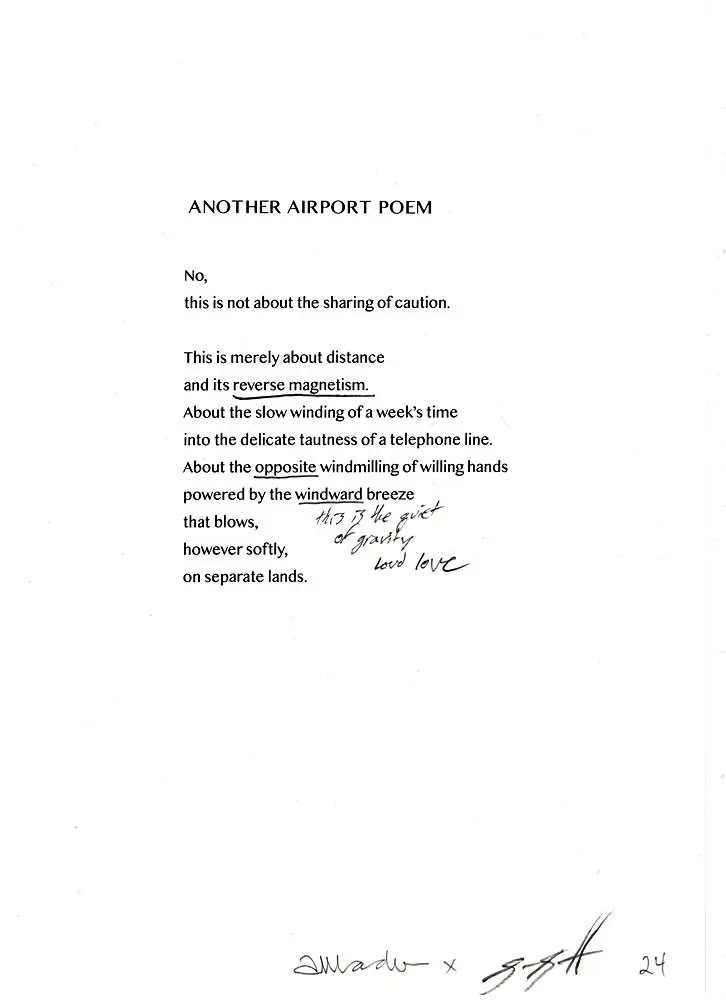
OpenSea: “Fifty Ways to Look at a Poem” has become a defining project for you. How did the idea emerge, and what questions were you asking about the relationship between writer and reader at the time?
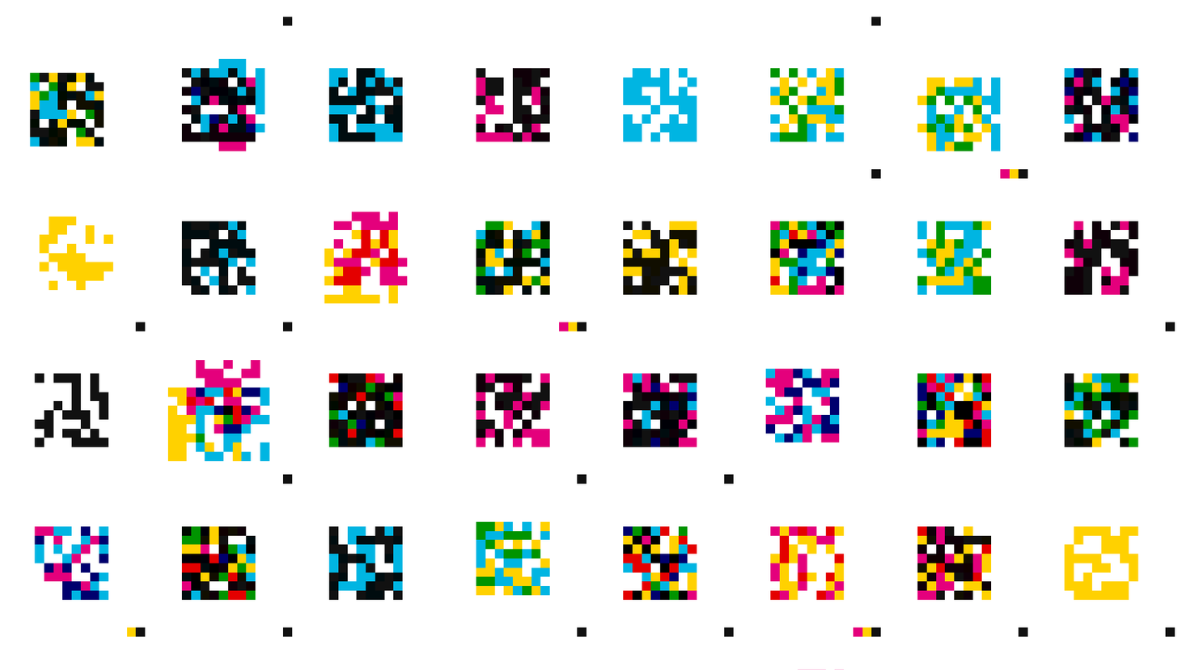
Ana María Caballero: I believe readers and writers construct each other in an endlessly procreative process I call analog generativity. No two readings are the same; readership evolves over time. Via Fifty Ways of Looking at a Poem I visually represented this idea by asking fifty different people to read and annotate the same poem. Their annotations became a performance of evolved readership and an explicit manifestation of the infinite ways a text can be interpreted.
OpenSea: What interests you about this kind of shared authorship, and how do you think it changes the way a poem is understood?
Ana María Caballero: I think reading is the closest form of communion between two minds. When we’re fully engaged with a text, we allow its words to enter our mind and become inseparable from our own. By visualizing multiple encounters with a single poem, I represent the evolving life of a text, forever shaped by interpretation, time and context.
In Record Time brings this evolving nature of readership to bear while affirming the significance of this dynamic. Records live on if they’re read — and are remade every time within our private and communal minds.
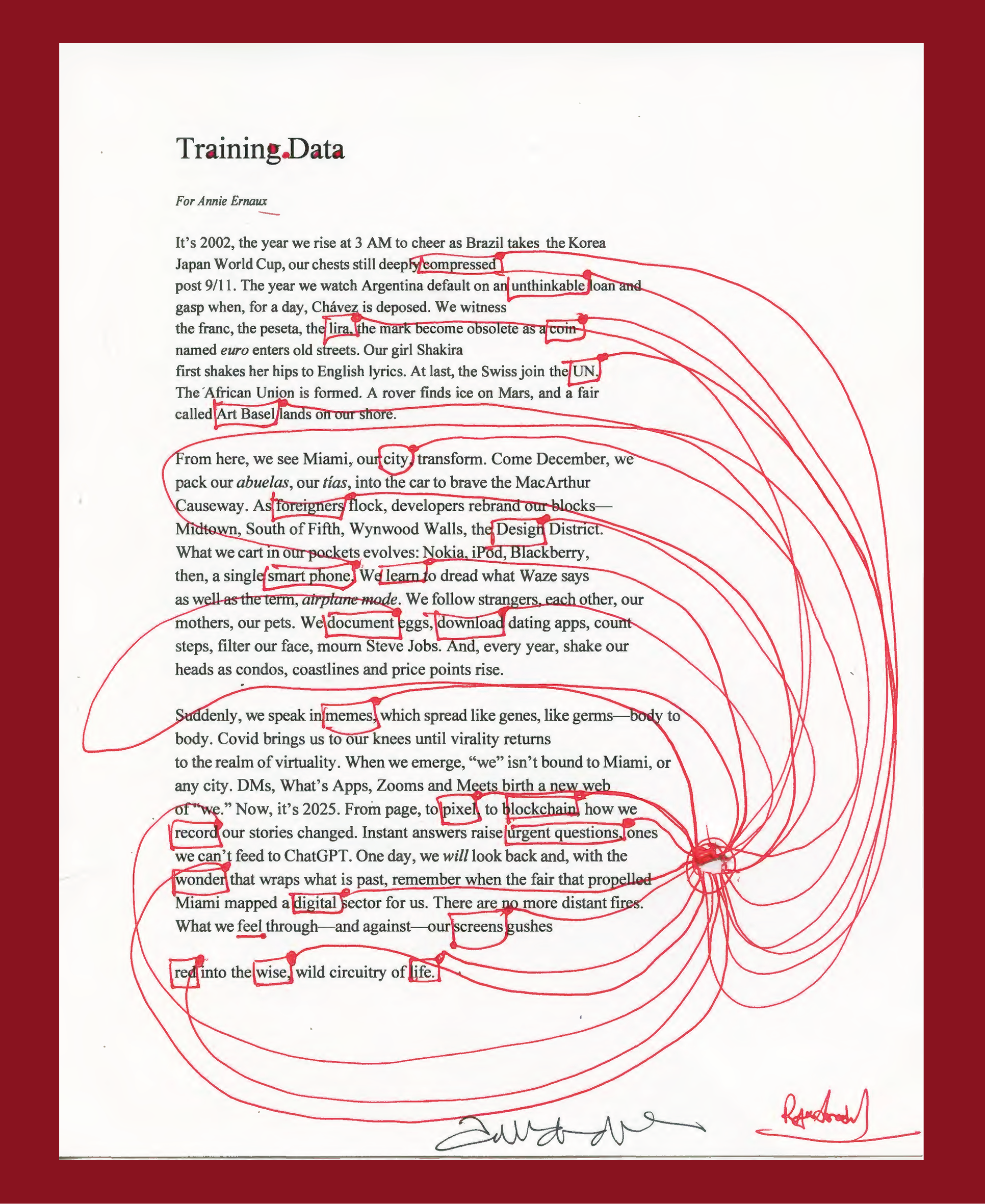
OpenSea: For Art Basel Miami you are creating a new poem that will be physically annotated by other exhibitors before being scanned and minted as NFTs on OpenSea. What drew you to this format, and what do you hope visitors take away from participating in it?
Ana María Caballero: I hope that visitors will recognize the wide breadth of work being created by artists engaging with the blockchain. I also hope they’ll discover how fun digital ownership is.
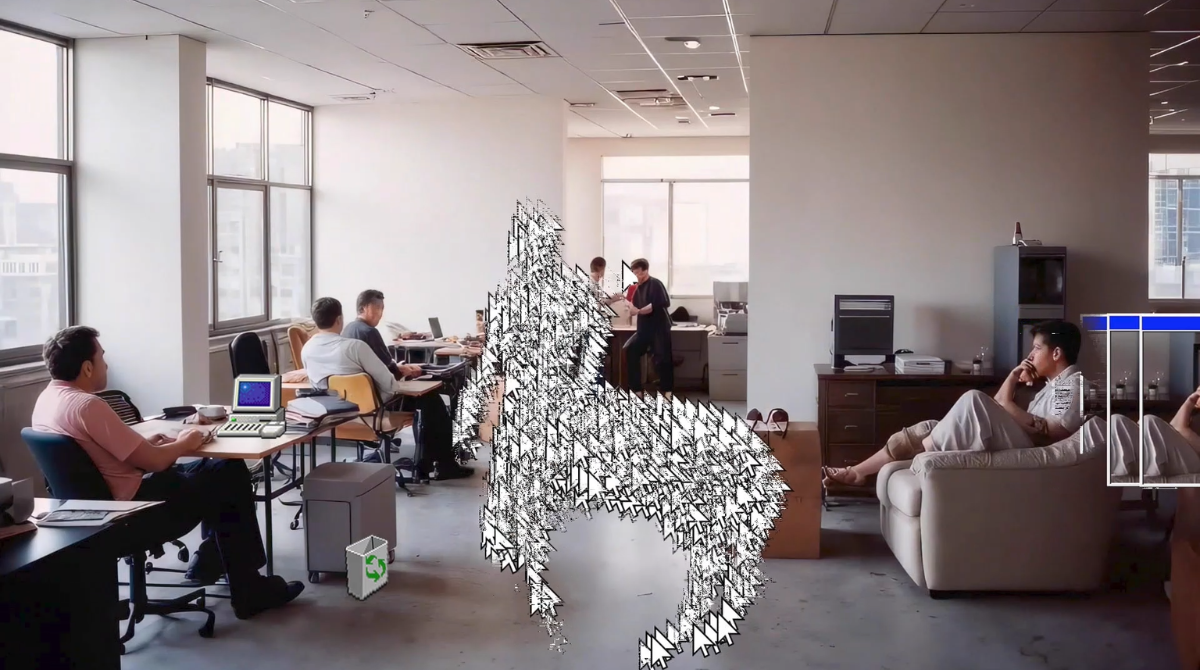
Training Data, the poem at the heart of In Record Time, speaks to all. In it, I trace our evolving relationship with technology, leading up to Zero 10.
What better way to participate in the future than by stewarding a text that documents the extraordinary present?
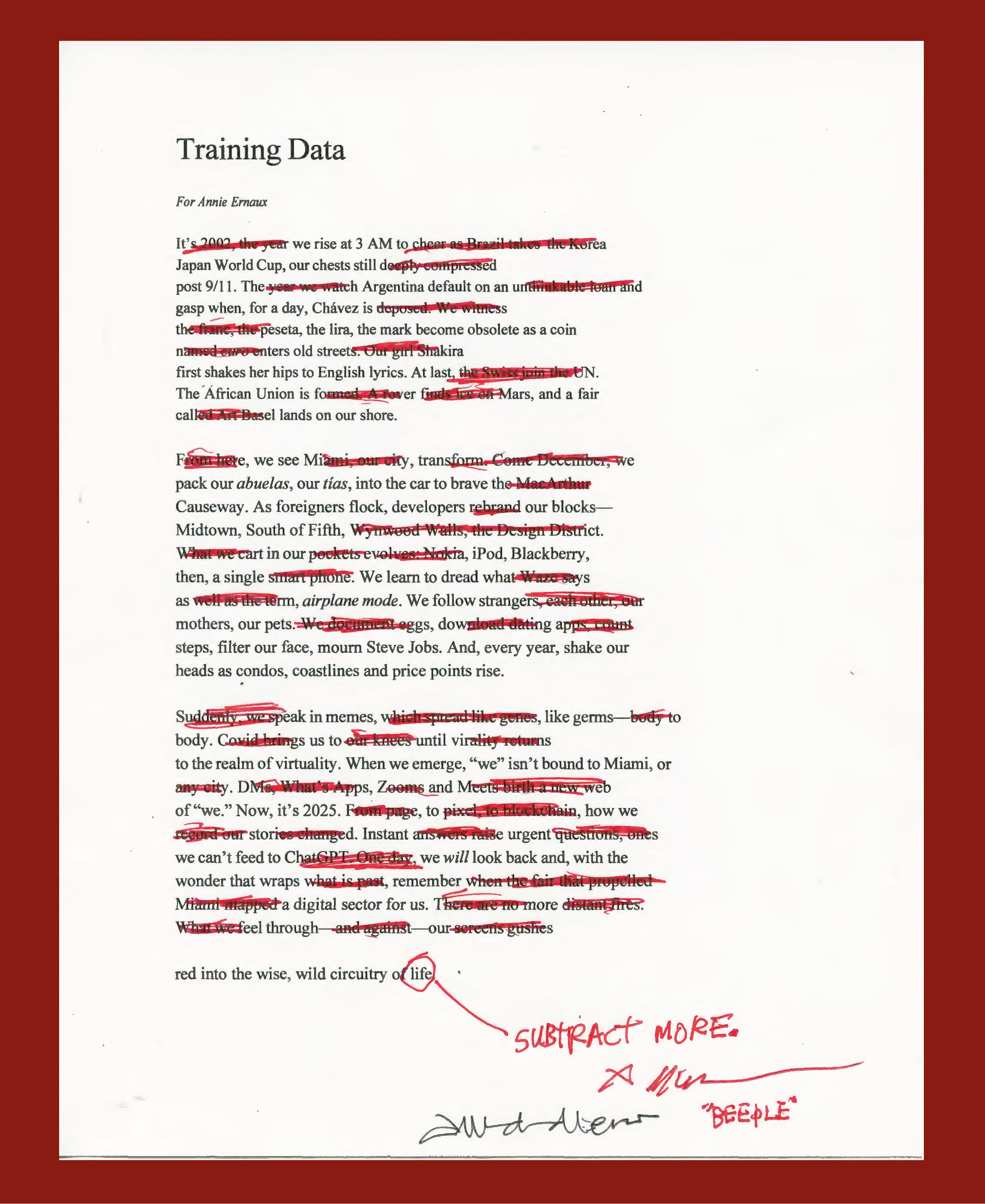
OpenSea: This activation creates an entry point for web2 visitors to explore web3. How do you think about welcoming audiences who may be encountering digital poetry for the first time?
Ana María Caballero: Anyone who’s been alive over the past twenty years will relate deeply to the poem, which documents the way technology radically changed our lives since 2002, the first year of Art Basel Miami Beach.
Training Data fuses private and collective recollection, which is how memory-creation operates. The tension between private and public memory drives my literary practice; I’ve long held that we access the universal via the personal and the transcendental through the mundane. This same tension propels one of my favorite books, The Years, French Nobel Laureate Annie Ernaux’ monumental act of collective remembrance, to whom I dedicated the poem.
It’s very meaningful to know that a work of literature will become many people’s first taste of web3 and for this I’m infinitely grateful to Eli Scheinman and Benny Grossman, who invited me to play along. It’s been a gift to work with the OpenSea team on this project.

OpenSea: You have achieved a blend of literary, artistic, and technological recognition. What are you exploring next, and where do you feel your work is heading in the coming year?
Ana María Caballero: In 2026 I will publish two new books, a poetry book, Material, and my first novel, /Cuts. I’m also working on three different museum shows for Fall of ’26.
They will be quite different so it’s challenging to map out what I’ll present in each while maintaining a unified vantage point. My ultimate plan is to continue expanding the ways I present poetry to the world — via installations, sculpture, generative AI, and of course, beautiful, regular books.
Disclaimer: This content is for informational purposes only and should not be construed as financial or trading advice. References to specific projects, products, services, or tokens do not constitute an endorsement, sponsorship, or recommendation by OpenSea. OpenSea does not guarantee the accuracy or completeness of the information presented, and readers should independently verify any claims made herein before acting on them. Readers are solely responsible for conducting their own due diligence before making any decisions.