
What if managing a virtual football club could give it lasting staying power? That’s exactly what Footium, a multiplayer sports management game powered by blockchain technology and NFT ownership, aims to deliver.
After graduating from its closed beta in August 2024, the game is ready to challenge established favorites in the football management genre to create a game with long-term appeal. What began as a university hackathon project has grown into a thriving community of over 1,000 players, proving the demand for a new approach with deeper fan engagement. Seeking to shake up its category, the web3 sports management simulation offers a more social setting that brings fun to online competition, with a rewards system that keeps players coming back.
Footium was founded in June 2020 by Jordan Lord (CTO) and James O'Leary (COO), who began building the game during a hackathon. George Benton (CEO) joined in 2021. Today, the team is gearing up to dominate the football management space by offering better in-game incentives, digital ownership and a community-driven experience where virtual football club owners compete for league supremacy.
In this way, Footium raises the stakes for players by creating a virtual arena in which every club’s history gets recorded on blockchain. When playing Footium, you’ll know your every decision shapes your club’s long-term legacy, impacting your status among fellow players.
Footium’s origin story

Footium’s roots can be traced back to late 2016, when Benton, now the company's CEO and co-founder, was a university student with a keen interest in finance and technology. His journey into the world of cryptocurrencies began when he joined his university's investment club and opted to focus on Bitcoin trading in its virtual portfolio.
This initial exposure to cryptocurrencies sparked a passion that would shape Benton's career trajectory. He immersed himself in the crypto world, starting the first cryptocurrency club at the University of Leeds in 2017. Over the next few years, Benton gained valuable experience through internships at various crypto companies and worked at a web3 accelerator where he ran hackathons and managed operations.
“It’s been good fun to see the crypto space evolve from the wild days of ICOs [initial coin offerings] to real products now that are actually usable,” said Benton. “I’m proud to be a part of this moment where blockchain can power the next era of gaming.”
At the time, Benton and his cofounders shared a similar frustration with existing football management games. They felt that single-player games became predictable and easy to exploit, while multiplayer versions often lacked proper incentives and fair competition, often forcing players into matchups with much more powerful opponents. Lord had been building football simulations in his spare time for years, and he teamed up with O'Leary and Benton to start building a game to remedy these issues. Footium gradually evolved into a full time pursuit as the team secured seed funding in March 2022.
“There simply wasn’t a clean fix for these problems with the football management genre,” said Benton. “In our case, we actually found that most of the problems could be solved by using blockchain to add real incentives and transparency within these games, not just a means for spinning up a currency."
Footium utilizes the Arbitrum blockchain to produce verifiable results for game outcomes and trades and create a clear track record for all the ownable elements of the game, simultaneously mitigating the opportunity for exploits of the gameplay and creating a transparent reward system for players to engage with.
Footium makes players the managers

Footium is a multiplayer blockchain-based football management game that allows players to own and manage their virtual football clubs, similar to the Football Manager franchise, but with ownership of clubs and players secured on-chain. The game is designed to closely mirror the real-world football club ecosystem, with player transfers, youth academies, player retirements, and a competitive league structure.
Players compete across eight divisions, with the goal of advancing to higher tiers through strong performances, similar to the English football pyramid’s system of competitive league tiers. Each season consists of 22 matches spread out over three weeks, preceded by a pre-season for owners to strategize, make transfers on OpenSea, and sign academy players before the competition begins.
When games kick off, each match features a 2D visualizer that displays key match events such as shots, goals, and free kicks. The matches are then accompanied by a dynamic commentary stream which provides additional detail about on-field action, adding texture and a sense of action to the strategy-simulation game. Players can then manage their team live during the daily 30-minute matches to try and achieve victory, making calls on plays and lineup changes.
As club owners, players are able to recruit procedurally generated players for their lineups with new players becoming available via their club’s youth academy feature, set their lineups for match-ups with opponents, invest in training their players, swap in-game players with other Footium club owners on OpenSea, and, as each player ages a year per in-game season, bid farewell to their players when they eventually retire.
One of Footium's unique selling points for players is the in-game clubs’ intellectual property. Rather than licensing existing teams, Footium allows players to create their own intellectual property (IP) with their clubs and develop entirely unique virtual brands with their creations. This approach has fostered a rather creative player base, as Footium players are designing custom physical merchandise, redesigning club badges, crafting team chants using AI tools, and even minting NFT tickets to commemorate significant matches — all based on the in-game clubs using player-created IP.

Footium’s economic simulation demands a shrewd football strategy
Because Footium's gameplay lets players transform 2D players into digital items that can be bought and sold, fans get to live out the experience of a real-life football club owner in Footium. Its setup simulates the team-management economy and forces strategic decisions from the beginning. Each club in Footium is represented by an NFT, which grants the owner access to the game and the ability to manage their team.
Even the in-game player lifecycle in Footium mirrors that of real-world football: Each season, clubs can scout up to five randomly generated prospects from their youth academy. Managers can then choose to mint these prospects as NFTs, paying a fee in ETH to bring them into the active squad. Players age with each passing season until they eventually retire at age 32, at which point they can no longer be used in matches but will remain as collectible NFTs.
“We aimed to build a system that felt fair and still closely mirrored the realities of managing a football club,” said Benton, adding that even though Argentina forward Lionel Messi is “out there defying the odds at his age,” retiring players lends better velocity to the game economy.
“Players will always need to effectively manage their squads across seasons to stay competitive,” Benton explained.
Footium has recently introduced a rarity system for players, with common, bronze, silver, and gold tiers. Rarer players have higher potential but still require proper training and management to reach their peak performance, adding depth to the player market and team-building strategies.
The game's economy is designed to be self-sustaining and rewarding for skilled managers. Prize pools are funded by fees collected from minting new players and swapping existing ones. Benton says that 90% of these collected fees are redistributed to players as prizes for winning their leagues, with the remaining 10% serving as company revenue. This model ensures that successful managers can earn rewards for their efforts, while also providing a sustainable business model for the company. The Footium team says the game has already accumulated over 45 ETH in prizes from their recent Beta Seasons, which will be distributed over the next few seasons to Footium players.
What’s coming next for Footium fans
Currently, there are only 3,060 clubs available for players to collect and operate, but the team plans to expand the pool by adding new clubs to new divisions at the bottom of the league pyramid as the player base grows.
As Footium progresses beyond its recent closed beta, the team is focused on growing the player base and refining the gaming experience, which has already demonstrated traction. Compared to in-app spenders in leading mobile games, Benton says Footium’s retention rates are in the top 2%.
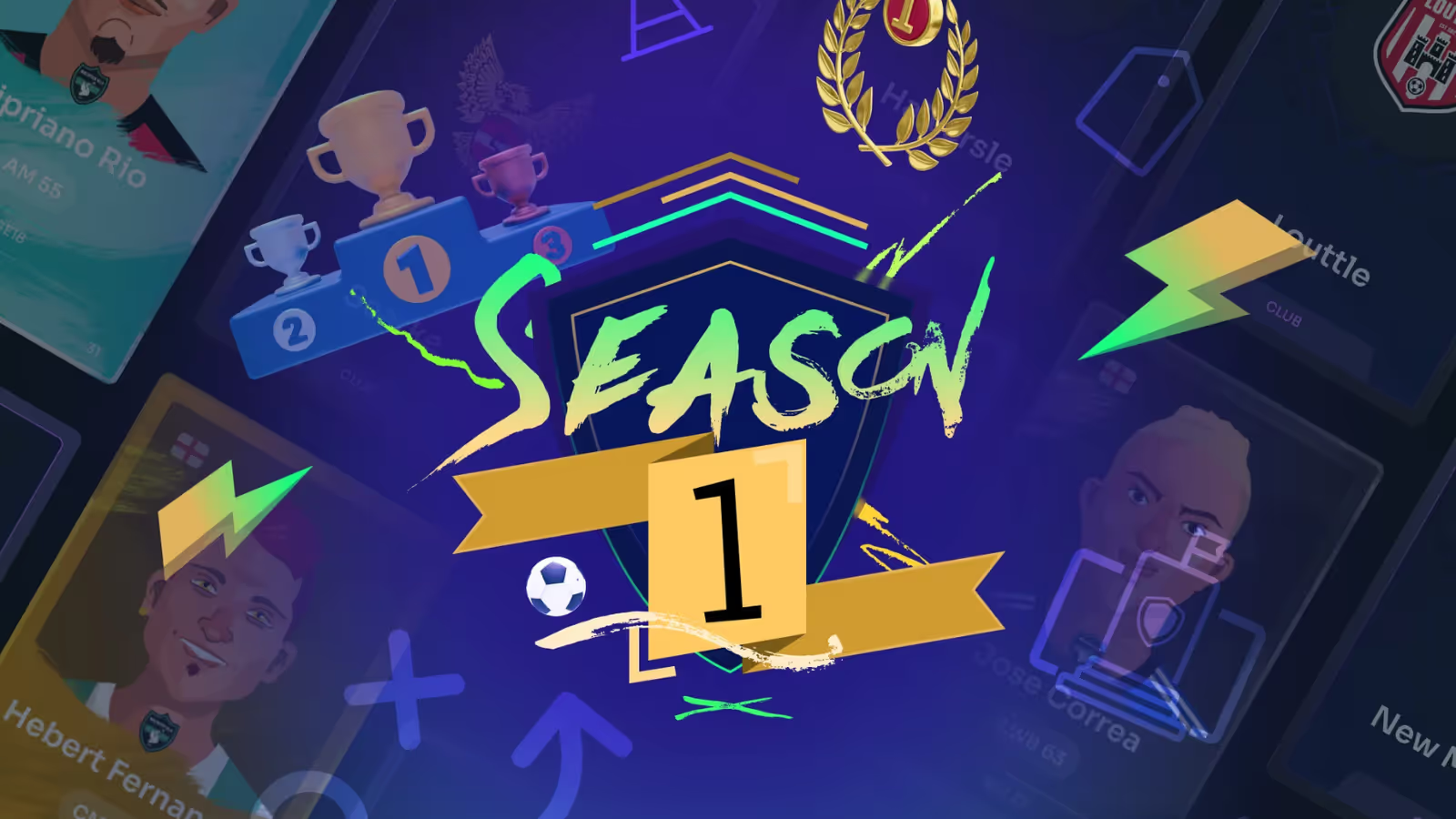
Meanwhile, in the short term, Footium is preparing to fully launch its reward system with the arrival of Season 1, which will go live in October 2024. Further out, the Footium team is looking to tackle the broader ecosystem of football gamers who’ve been playing titles like Football Manager or FIFA Ultimate Team.
“I truly believe that we have the right formula of social, gameplay, rewards, and ownership that can address the mass market,” said Benton. “It has been a challenging journey building Footium to this point due to the novel obstacles we have had to overcome, but seeing the players enjoying the game so much is extremely rewarding for the entire Footium team.”